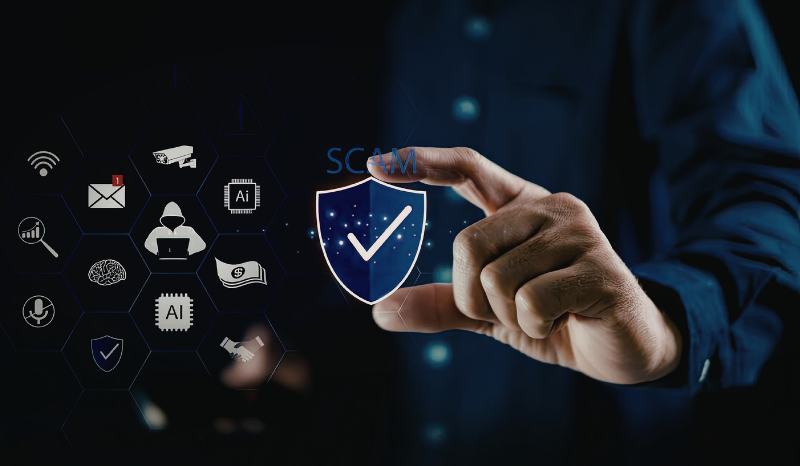
Fraud in Higher Ed: Why Identity Verification Alone Isn't Enough
Across higher education, fraud is no longer being treated as an isolated problem—it is becoming an operational challenge.
Across higher education, fraud is no longer being treated as an isolated problem—it is becoming an operational challenge.

Artificial intelligence is now central to strategic conversations across higher education. Institutions are experimenting with generative tools, predictive analytics, and new forms of automation across enrollment and student information systems.
But the most important question is not, “What do these tools do?”

Today, the U.S. Department of Justice filed suit against the State of Virginia over how the state provides tuition assistance to certain migrant students. While the case is narrowly focused, it raises a broader issue for colleges and universities: whether long-standing approaches to residency and tuition eligibility may now face greater federal scrutiny.

Artificial intelligence is changing the way students weigh their educational options. Many are looking more closely at programs that give them a reliable way into early-career roles. The 2025 enrollment patterns show a noticeable shift in student priorities where they are choosing programs that are clearer, more relevant, and faster to complete.

On Tuesday, the National Student Clearinghouse released its Preliminary Fall 2025 Enrollment Trends Report, representing roughly half of all higher education institutions nationwide. The report shows total undergraduate enrollment increasing by 2.4 percent, marking another year of steady, modest growth and suggesting that overall enrollment is stabilizing.
Beneath that headline, however, the data reveals a meaningful shift in where and how students are enrolling. Learners are increasingly prioritizing flexibility, affordability, and speed to credential over institutional prestige.

Grooper and Mutara, Inc. have joined forces to launch an AI-powered solution that streamlines student admissions and compliance for higher education institutions. By...

If you follow our blogs or attend our webinars, you may have noticed that we're been doing a lot with artificial intelligence recently to drive value out of the student onboarding and student compliance processes. I'll have to admit that until recently, my experience with AI had been driven by my data warehousing role at PeopleSoft in the 1990's.
Here is how things have changed since then.
Yesterday, President Trump issued "Improving Education Outcomes by Empowering Parents, States, and Communities" which describes how the executive branch intends to move functions of the department of education elsewhere. Many Financial Aid professionals still have PTSD as it relates to the rollout of the new FAFSA in 2023 (which contributed to a 9% decline in overall enrollment). Are we on track for something similar in the next academic year?

With today's focus on compliance and government efficiency, we expect there to be a high level of scrutiny on financial aid processes and personnel costs at public higher education institutions. As such, we have identified 4 efficiency initiatives that institutions can kick-off to be ready.

One of the impacts expected in the higher education industry as it relates to the Florida DOGE taskforce is a high level of scrutiny on any and all spending at public higher education institutions. Anything that doesn't support DOGE goals will most likely get cut.